Of course, look and feel matter.
But when you’re choosing space to support your important meetings and workshops, the really important stuff can go unseen at first.
Everything needs to be easy and adaptable. Can you move things around, change layouts, and use the space however you want?
Does the tech and other equipment quietly support your aims, or get in the way?
Does the space feel welcoming and inspiring, from the moment you walk in?
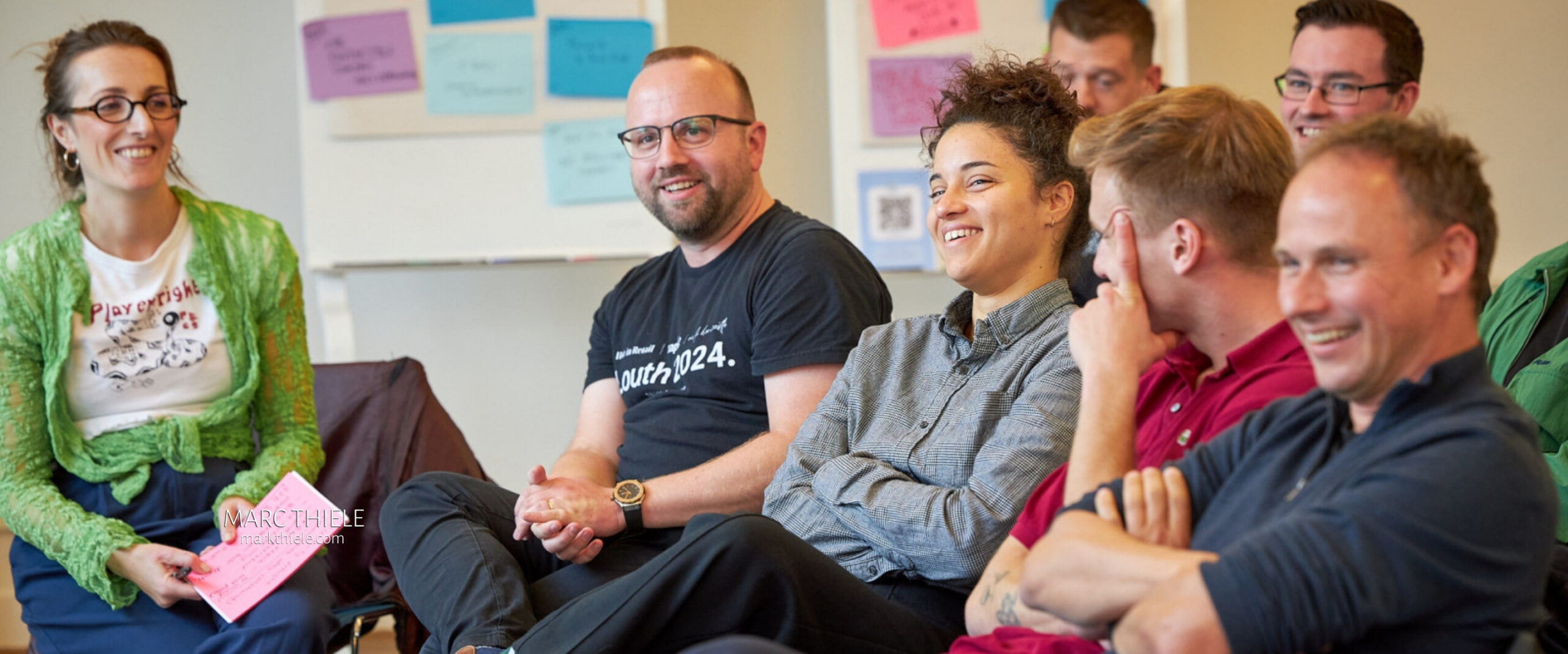
Workshop spaces should be social on purpose. Innovation and creativity are social processes. Running a workshop requires people to engage, collide, collaborate and be really bloody social, often from an awkward or difficult starting point.
Think about the best room you’ve ever run a meeting in… what made it work?
There are certain signals a room can give people, way before anyone speaks. And let’s face it, we’re often doing work that is challenging or downright difficult when we come offsite. People need to feel welcome, comfortable and able to speak freely, before we can ask for creativity, respectful disagreement, innovation or learning.